Science in Space: Amentum Leads Artemis II Research Breakthroughs
The historic Artemis II mission didn’t just advance humanity’s exploration of the Moon. It made history by introducing Science Officers to NASA’s Mission Control team for the first time. Amentum’s Angela Garcia and Trevor Graff brought a critical scientific perspective, enhancing the mission’s research and discovery goals in groundbreaking ways.
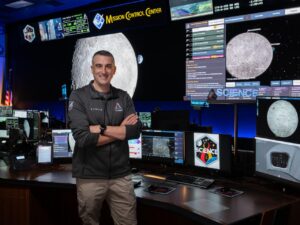
Their roles were the result of two years of rigorous preparation. Reflecting on their contributions to transforming how scientific operations are integrated into lunar missions, Graff shared, “What Artemis II did was set the foundation for science operations, like a part one. It established us and our science role out on the front room of Mission Control… getting the wheels turning so that science is now integrated into future Artemis missions in a way that I think was even more powerful than we expected going in.”
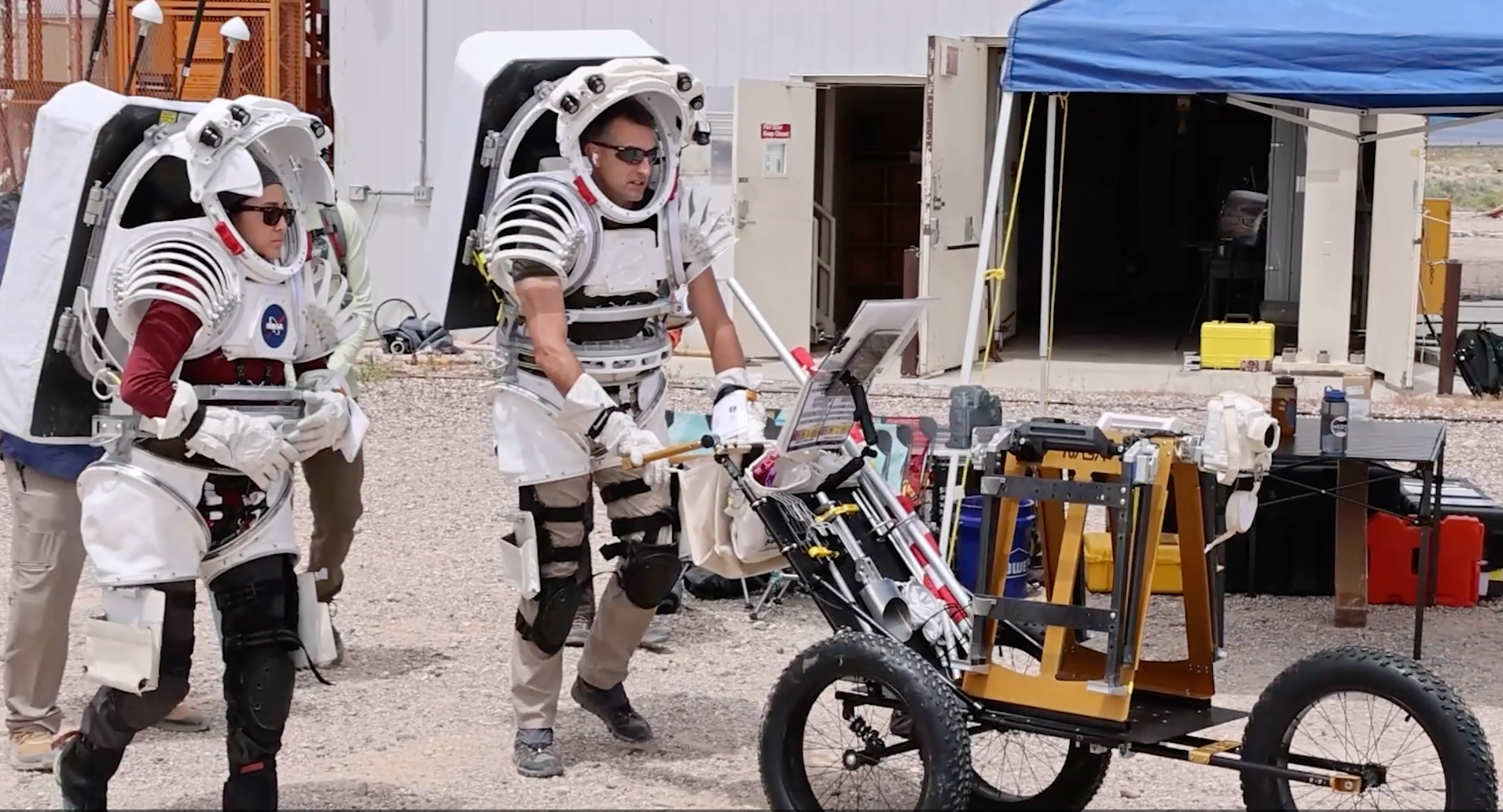
Before the launch, Graff and Garcia undertook the critical task of preparing the Artemis II astronauts for their historic journey. They provided hands-on training in remote, Moon-like terrains, equipping the crew with the skills to observe and document geological formations—vital for understanding the Moon’s far side.
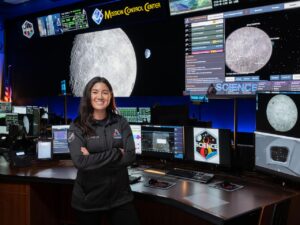
“You’re training and guiding the astronauts to scientifically describe what they’re seeing,” Garcia explained. “We had a lunar targeting plan with a series of various features we wanted them to observe. Then there were specific clues and details we asked them to compare—like, whether there were any color differences between features. Color can reveal the chemistry of the rocks and minerals present.”
Once the mission launched Graff and Garcia played an essential role in real-time scientific operations. They analyzed raw data and imagery from the Moon’s rarely studied far side, providing insights into an area largely unseen by human eyes.
The science team focused on two key objectives. One was to study flashes of light caused by meteor impacts on the lunar surface—phenomena the astronauts observed during an eclipse. This data helps scientists better understand the Moon’s activity and interactions with its environment. The other goal involved identifying and documenting variations in color and patterns across the lunar far side. These observations offer critical clues about the Moon’s geological history and formation, laying the groundwork for future missions aiming to explore the Moon’s South Pole, a region of strategic interest.
“The work we’ve done is just the beginning,” said Graff. “To see future Artemis missions build on this foundation is incredibly exciting.”