
Amentum’s Role in Guiding Army Aviators at Fort Rucker
Reintroducing Solo Cross-Country Flights and why Getting Back to Basics Matters
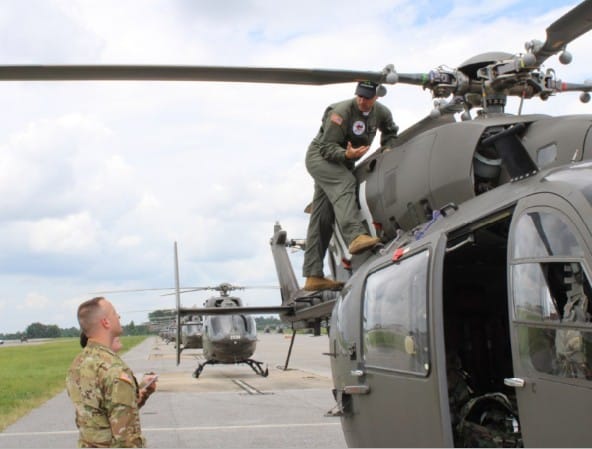
For the first time in many years, student pilots at Fort Rucker have successfully completed solo cross-country flights, a milestone in their training made possible by the expertise of Amentum’s team of instructors.
The reintroduction of solo cross-country flights marks a significant shift in the Army’s aviation training curriculum, signaling a renewed focus on foundational skills.
For more than 40 years, Fort Rucker, home to Army aviation, has been the heart of pilot training. Since 1989, Amentum’s trainers have instructed more than 40,000 pilots.
“We’ve been doing this for a very long time, and we’ve made this work look so easy that people might have mistaken it for being easy,” said Amentum’s Todd Marshburn, a retired Army aviator and leader within the program.
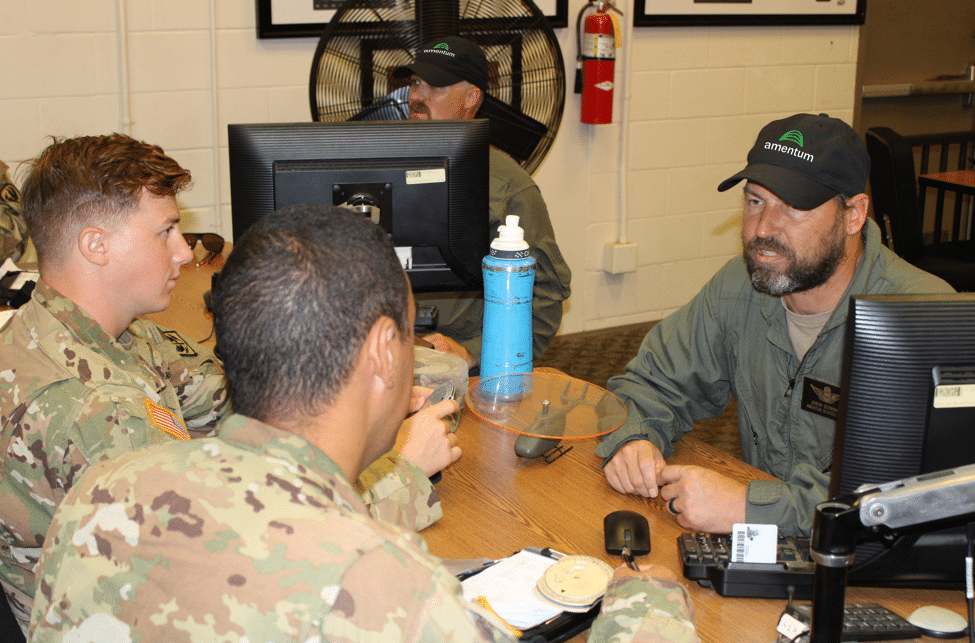
Amentum instructors guide trainees through an intensive 20-week program, which includes classroom lessons, simulator practice, and hands-on flight training. During this period, students go from having zero cockpit experience to acquiring advanced skills such as tactical flying and navigation.
The recent push toward solo cross-country flights, a requirement that had been phased out years ago, reflects the Army’s commitment to teaching foundational skills. These flights, while less daunting than they sound, require students to independently operate an aircraft, navigate to a destination 50 miles away, refuel, and return— all without the safety net of an instructor on board. For the students involved, it’s an unforgettable milestone in the journey toward becoming confident, capable military aviators.
“This moment is all about giving the students ownership and confidence,” says Marshburn. “It’s their first opportunity to operate an aircraft solo under real-world conditions, which is excellent preparation for their future roles in the operational Army.” While challenging to reintegrate these flights into the curriculum for the Lakota aircraft, Amentum’s training enterprise has worked tirelessly to ensure the program’s success—an accomplishment that Marshburn says is “a good news story.”
The evolving training curriculum continues to center on the Army’s UH-72 Lakota helicopter, but the program is examining ways to reintroduce simpler, foundational training that builds base-level piloting skills. “Some of these very advanced aircraft take away the feedback pilots would traditionally receive,” Marshburn explains. “Foundational skills like learning to hover are critical, and we’ve embraced the idea of getting back to basics as a stepping-stone for pilots to progress into advanced aircraft.”
Even as aviation training evolves, Marshburn and his team are focused on maintaining the gold standard of excellence for which Fort Rucker is known.
“The way we’ve been doing things for the past four decades is incredibly efficient,” says Marshburn. “Our mentality is to continue being part of the solution. We demonstrate our value every day.”
Fort Rucker remains at the heart of the Army’s aviation mission. As Marshburn says, “With all the change around us, one thing doesn’t change—our focus on preparing pilots to skillfully execute their critical mission of protecting our nation. It’s what we’ve always done, and we’ll continue to deliver.”
Travis Ogburn, a retired Army aviator and one of Amentum’s instructors, recently spoke with Army public affairs about the reintroduction of visual flight rules training. You can read that article here.